
Guest diary: a family safari in Zimbabwe
Straight into the wild
Our plane touched down on a russet-coloured gravel airstrip in Hwange National Park, and within minutes we were on safari. We had come to Zimbabwe for something unforgettable to mark our twenty-fifth wedding anniversary. Our eleven-year-old daughter would not be persuaded to stay at home, and my husband’s brother decided to join us too. Jo, the Aardvark Safaris consultant who planned our trip, built our safari around two Imvelo camps, both in Hwange, chosen for their commitment to wildlife, conservation and the communities around them.
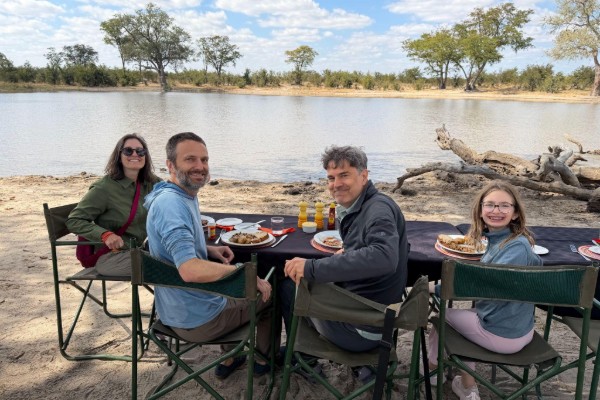
Rather than taking us to the lodge, our driver Daniel went straight out into the park. A breeding herd of elephants crossed the road ahead of us, closing ranks around their baby with ears flapping. As we moved off, a large elephant charged the vehicle, trumpeting, before pulling up in a bluff. Round the next bend a Verreaux’s eagle-owl sat in a tree with a frog in its beak, and my daughter spotted a yellow-billed hornbill, which Daniel called a “flying banana.” The drive ended at a surprise bush lunch beside a waterhole instead of the lodge.
Nehimba Lodge: lions, wild dogs and elephants on foot
At Nehimba Lodge our guide was Liberte, serious, friendly and highly accomplished. That evening he took us to find a male lion that had been seen earlier in the day. Liberte put him at close to ten years old. He was huge, with a sandy mane, and he let us come close before giving a couple of low grunts. That night we warmed our toes on hot water bottles, known in camp as “bush babies.”
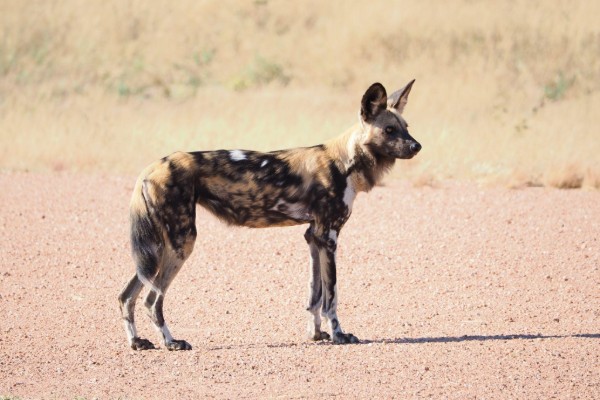
The next morning was cold and dark. We were wrapped in the blankets and ponchos the camp provided, watching elephants, when Liberte took a call. African wild dogs were nearby, and he asked whether we wanted to go. We tried not to get our hopes up. Liberte raced across the park and we caught a fleeting glimpse of one dog trotting down the gravel road into the bush. Then word came that the pack was heading for the airstrip. We arrived just as four dogs walked out onto the gravel. Holding our breath, we watched them stand, yawn and mill about, in no hurry at all, until they decided the show was over and pranced back into the bush. The mood in the vehicle was electric.
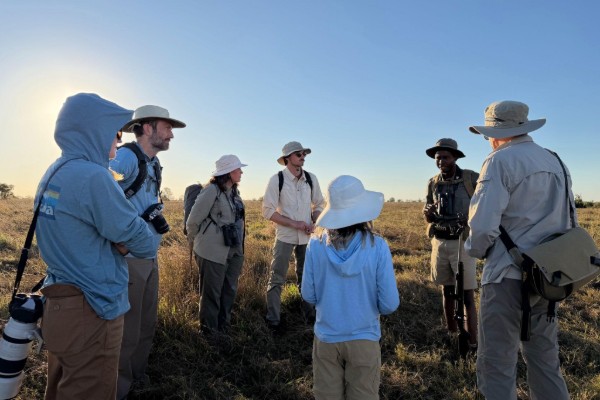
That afternoon Liberte led us out on foot to track elephants. Everyone was alert and a little nervous without the vehicle around us. He read the tracks and checked the wind constantly, and when an elephant approached he guided us behind a tree. It walked slowly past us, twenty-five feet away. We finished the day with sundowners by the hippo pond. I sat with a gin and tonic as the sunset gave way to stars, with a chorus of frogs and deep hippo grunts in the background.
All aboard the Elephant Express
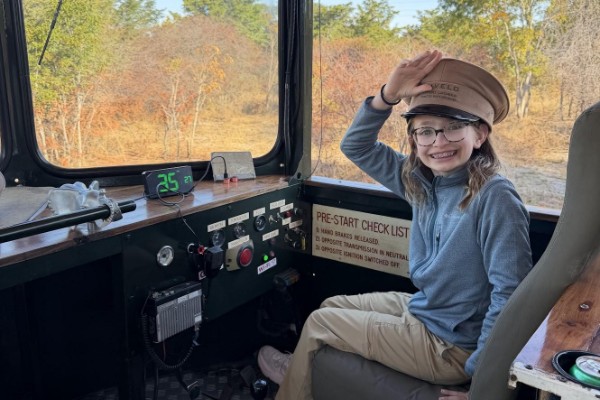
We travelled on to our second camp, Bomani Lodge, aboard the Elephant Express, which looks like something out of a Wes Anderson film. It runs on a diesel truck engine, and they let you drive it, conductor’s hat and all, as long as you stay under forty kilometres an hour. We stopped along the way to watch a herd of giraffe.
Southwest Hwange opens into grassland with fewer mopane trees. There are slightly fewer elephants here, which leaves room for a resident lion pride and more plains wildlife. Our guide here was Brighton, who had an infectious smile and boundless enthusiasm for wildlife. That night, elephants fought right outside our tent, trumpeting and smacking their trunks, and before dawn my daughter heard hyenas. We ate breakfast by the campfire, where the chefs offered us “giraffe toast,” named for the grill marks left by the open fire.
Tripod’s story
Brighton reckoned there were around twenty-two lions in the area, and we set out to find them. They were just outside the Bomani concession, but Brighton knew a guide at the neighbouring camp and got permission for us to cross over. One of the males, Tripod, lay resting. He was caught in a poacher’s snare when he was very young. His leg healed but never grew to its normal length, and he has limped ever since. The rest of the pride, perhaps because he is brother to the dominant male, tolerates him and makes sure he is never left behind after a kill.
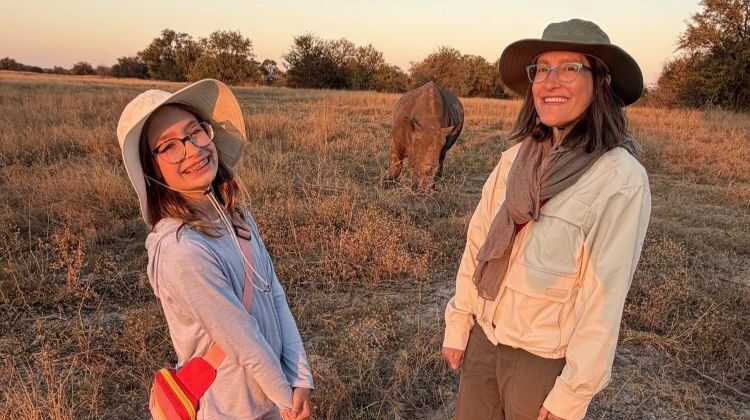
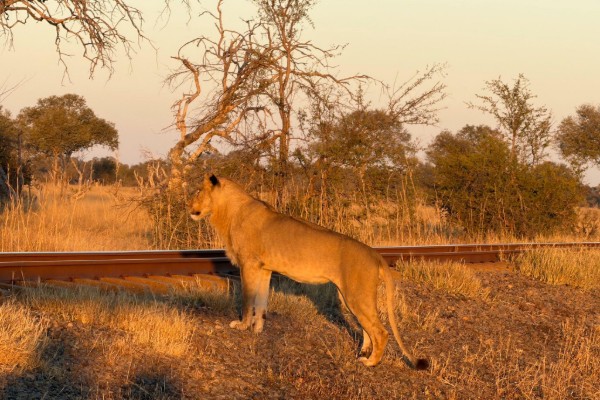
Bomani sits just outside the park, so every drive in and out took us past a rhino enclosure. On one pass, Brighton grinned and said our surprise was spoiled, because one of the rhinos was resting right against the fence. Guests at Bomani help fund this white rhino project. Later that day Brighton spotted a few vehicles gathered by the railway line, where the lions were crossing. The females looked fit and healthy. At the back came Tripod, limping heavily and unable to put any weight on his back leg as he struggled to keep up. He paused on the tracks and stood framed against the setting sun.
A visit to Ngamo village
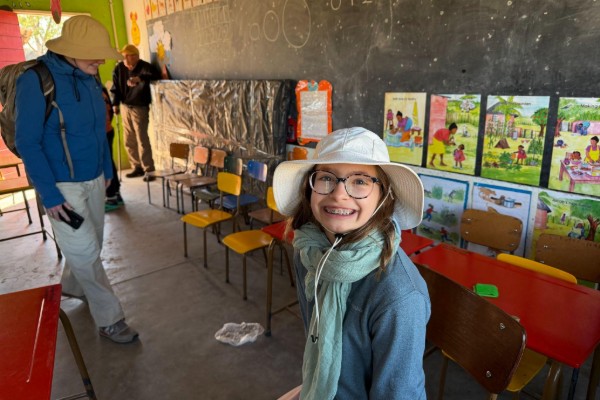
Bomani borders communal land near Ngamo village, where Brighton grew up and where he hopes one day to qualify as a walking guide. The next day we visited. In many rural villages children are taught outside under camelthorn trees. Imvelo has funded the Ngamo school, which now has solid concrete classrooms, proper housing for teachers and a warm meal every day for every student. At a family home we sat around the fire that serves as the kitchen while the head of the household described the challenges of growing crops and protecting livestock. He spoke warmly about the difference Imvelo has made to the village. We finished at the health centre, where a young man who runs the laboratory showed us around with real pride.
Eye to eye at Stoffie’s Pan
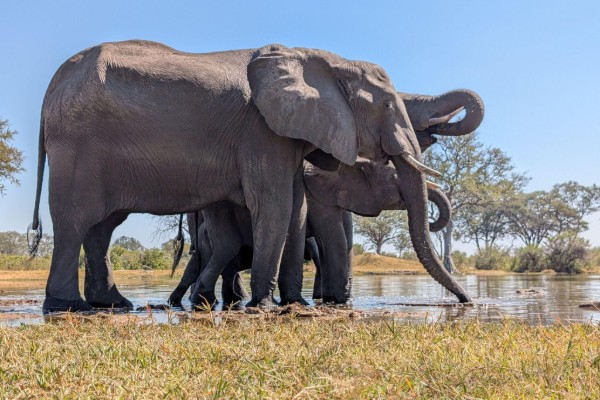
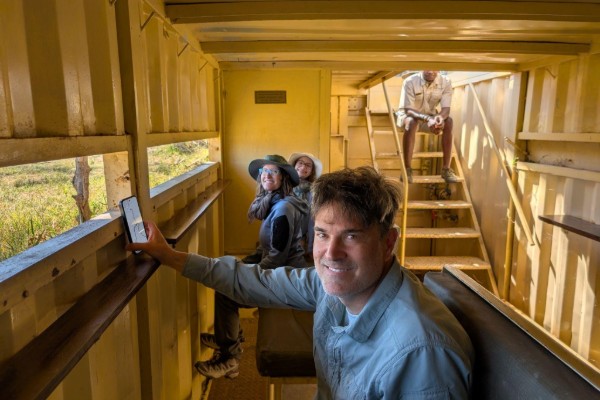
After a bush lunch we went to the underground hide at Stoffie’s Pan, a shipping container sunk deep into the earth with a wide window at ground level. A breeding herd walked straight to the spring in front of us. Nobody spoke. The only sound was a deep, rhythmic slurping as they filled their trunks. A tiny calf was still working out what to do with its own, swinging it from side to side and occasionally losing its balance. We were only a few feet away.
Rhinos and the community that protects them
That evening we visited the Rhino Sanctuary, part of the Imvelo Community Rhino Conservation Initiative, home to the two white rhinos we had glimpsed from the road, guarded around the clock by COBRA rangers Daniel, from the project team, explained that it could never have worked without the local community. When elephants raid crops or lions take livestock, retaliation is a natural response, and in the local language wild animals are simply called “meat things.” Ngamo supports the project because it benefits directly. Villagers are employed as COBRA rangers, and money goes back into the schools and clinic. The community chose to host the sanctuary on communal land rather than inside the park, keeping the income while the secure fence reduces conflict with wildlife. The same fencing that protects the rhinos also keeps predators away from the villages.
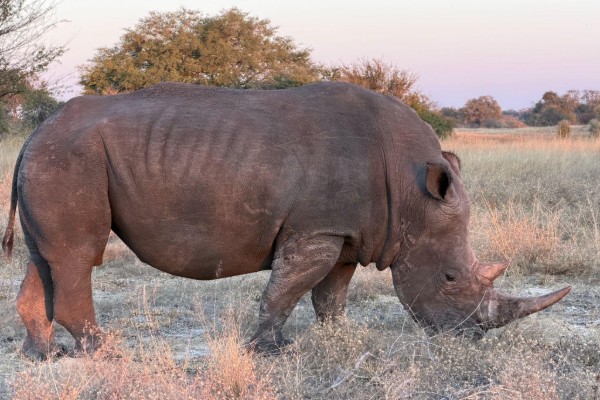
The rhinos are guarded day and night, so they are relaxed around people, and we were allowed to walk into the enclosure. For something so heavy, they are astonishingly quick. When Kusasa set off at a sprint we followed, and only caught up because he stopped to graze. Watching my daughter quietly scan the brush, her eyes bright with wonder, I realised this safari had given us far more than a checklist of wildlife sightings. It had immersed us in the raw, unscripted rhythms of the African bush, from the adrenaline of a bluff charge to the quiet magic of listening to frog and bird song. Snuggling into our ponchos as the evening chill rolled in, we knew that these wild spaces, and the incredible people who protect them, had left an indelible mark on our hearts. Together, we watched the sun set for the very last time in Hwange, painting the sky in brilliant strokes of amber and violet.
What next?
Has Angela and her family’s story inspired you? We would be delighted to help with planning your perfect safari holiday, whenever you want to travel. Our team of experts has travelled widely throughout Africa and the Indian Ocean and can offer expert advice. Do get in touch – chatting to people by phone or email is what we do best. We listen, we explain, we answer all sorts of questions even those you didn’t know to ask, and finally we make suggestions. If this is your first time to Africa or your twenty first, we have a team standing by to help make the planning easy and the journey the best ever. Please get in touch whatever stage you’re at.

Leave a Reply