
Sea turtles in Africa and the Indian Ocean – where, when and how to see them
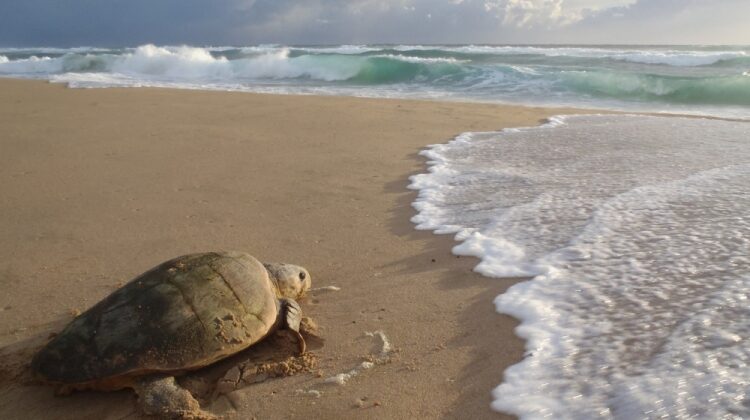
Older than the dinosaurs. Tougher than an asteroid. Built to cross entire oceans on nothing but instinct and the Earth’s magnetic field. Sea turtles are, by any measure, extraordinary reptiles and five of the world’s seven species call the coastlines of Africa and the Indian Ocean home.
Meet the ancient ocean wanderers
1. Green turtle – named for the colour of their fat rather than their shell, green turtles are herbivores that graze on seagrass and algae across tropical oceans worldwide.
2. Hawksbill turtle – recognisable by their narrow, hawk-like beak, these critically endangered turtles play a vital role in coral reef health by feeding on sponges.
3. Leatherback turtle – the largest sea turtle on earth. Leatherbacks are named for their unique flexible shell and can dive over 1,000 metres deep in pursuit of jellyfish.
4. Loggerhead turtle – built with a large head and powerful jaws to crack open hard-shelled prey, and often enter estuaries to forage for crabs and other invertebrates.
5. Olive ridley turtle – one of the smallest species of sea turtle, best known for their breathtaking mass nesting events called arribadas, where thousands of females come ashore together to lay eggs.
Witnessing these incredible reptiles in the wild is something truly special. Our team of travel experts draw on their own expertise and firsthand experience to bring you this guide on where, when and how to see sea turtles.
KENYA – green turtle, hawksbill turtle and olive ridley turtle
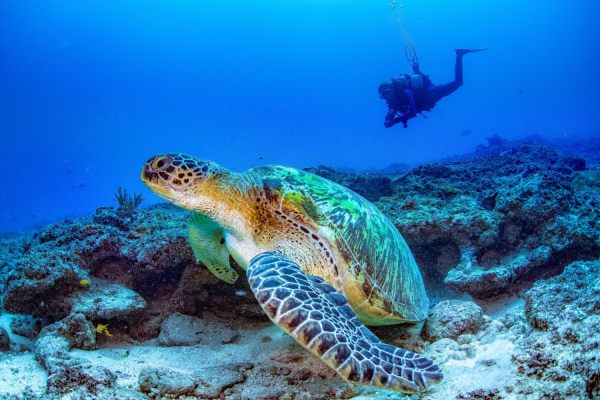
Green sea turtle – The Sands at Chale Island
Kenya’s coast sits along major Indian Ocean migration routes, offering sea turtles the perfect combination of warm sandy nesting beaches, rich coral reefs, and seagrass feeding grounds.
Protected areas like Watamu Marine National Park, combined with strong community conservation programmes, make it one of the most important sea turtle habitats in the Indian Ocean.
When to go: The best time to visit is from March to October, and from June to September, when you have the chance to watch hatchlings scramble to the ocean.
Where to stay: Three resorts stand out for turtle lovers. The Sands at Chale Island offers front-row seats to nesting green and hawksbill turtles. The Sands at Nomad at Diani Beach has an on-site marine education centre, and Medina Palms in Watamu sits right next to the Watamu Turtle Sanctuary.
How to see them: Join guided night nesting walks on Diani Beach, visit the Watamu Turtle Sanctuary to learn about rescue and rehabilitation, and snorkel at the marine reserve, which offers in-water encounters.
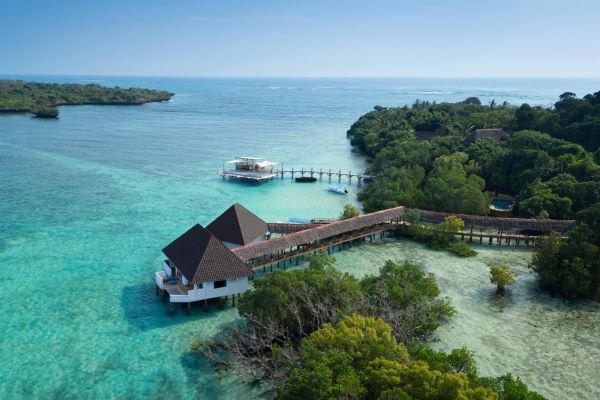
The Sands at Chale Island, Kenya coast
MOZAMBIQUE – green turtle, hawksbill turtle, leatherback turtle, loggerhead turtle
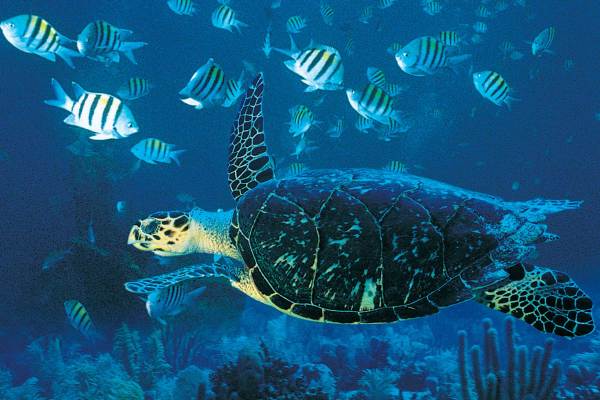
Hawksbill turtle – Azura Benguerra, Mozambique
Mozambique’s coastline and the beautiful Bazaruto Archipelago are among the most important nesting grounds in the Indian Ocean. The archipelago is a designated national park, offering exceptional marine biodiversity alongside turtle encounters.
When to go: November through to March is broadly the peak nesting season across Mozambique, with March often being the best month. You can expect to see hatchlings starting to emerge from around December through to April/May.
Where to stay: Kisawa Sanctuary, Azura Marlin Beach, &Beyond Benguerra Island are all situated on the Bazaruto Archipelago just off the Mozambique coast.
How to see them: At Kisawa Sanctuary, guests can join marine scientists from the on-site Bazaruto Centre to tag turtles, as well as snorkel and dive the reef for underwater encounters. The island-hopping excursion at Azura Marlin Beach includes snorkelling at Two Mile Reef, where sightings of various turtle species are common alongside rays, dolphins and the occasional dugong. Guests at &Beyond Benguerra Island can join daily beach patrols with the conservation team during nesting season and even escort hatchlings down to the sea, helping ward off predators on their crucial first journey to the sea.
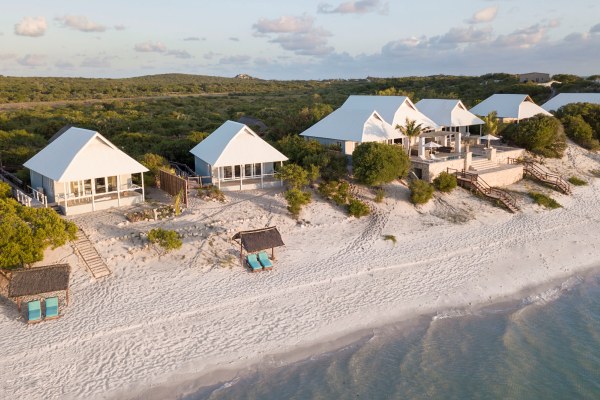
Azura Marlin Beach, Mozambique
MALDIVES – green turtle, hawksbill turtle, olive ridley turtle
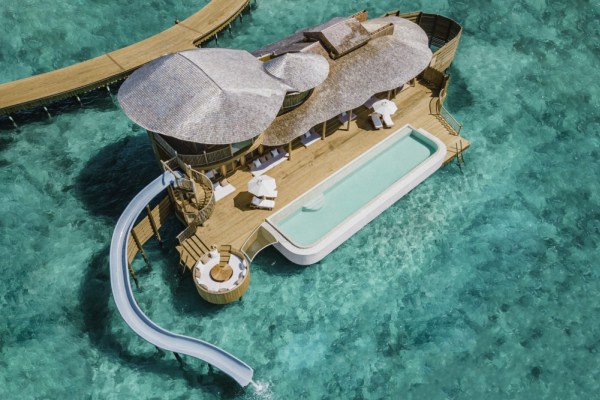
Soneva Jani, Maldives
The Maldives is a global stronghold for olive ridley and hawksbill turtles. The crystal-clear lagoons offer some of the best turtle snorkelling anywhere, and the islands are home to several dedicated conservation organisations, including the Olive Ridley Project.
When to go: November to February is the sweet spot, giving you calm water, good visibility, peak nesting activity, and the best overall weather.
Where to stay: Komandoo Maldives Resort, Lhaviyani Atoll. Six Senses Laamu, Laamu Atoll. Soneva Jani, Noonu Atoll. Makunudu Island, North Male Atoll.
How to see them: Six Senses Laamu runs guest conservation activities, including nest monitoring and satellite tagging programmes, and both Six Senses Lamu and Komndoo Maldives resorts are exceptional spots to swim with these charming species. Soneva has partnered with the Olive Ridley Project to open the Noonu Atoll Sea Turtle Rehabilitation Centre at Soneva Jani, the largest of ORP’s three Maldives facilities, specialising in preparing recovering turtles for release back into the wild. Guests are invited to learn about the conservation efforts and join the guided tours. Makunudu Island in the Maldives sits right next to “Turtle Point,” with hawksbill sea turtles regularly spotted directly from the beach reef and on organised dives from the resort’s PADI dive centre. Robyn our senior travel expert enjoyed swimming with turtles at a number of locations in the Maldives including Makunudu Island. Watch her video below.
SAO TOMÉ AND PRÍNCIPE – green turtle, hawksbill turtle and leatherback turtle
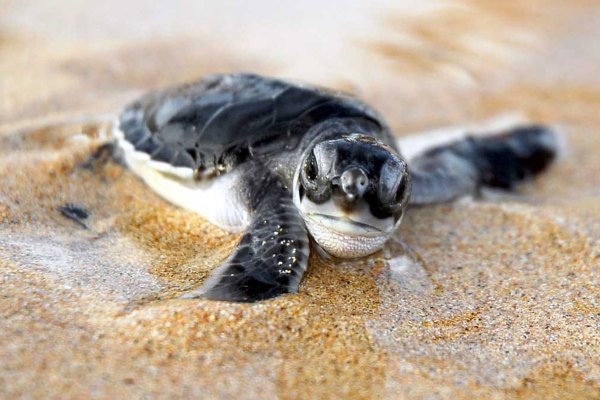
Sundy Praia, baby green turtle – Príncipe
São Tomé and Príncipe are tiny, remote islands off Central Africa. The warm Atlantic waters and long stretches of undisturbed beaches create perfect natural nesting conditions. The relatively undeveloped coastline means far less human disturbance than most nesting destinations, allowing turtles to return to the same beaches they’ve used for millions of years.
When to go: Nesting is mainly observed from October to January, with hatchlings best seen from December to April.
Where to stay: Sunday Praia, Hotel Belo Monte, Bom Bom.
How to see them: Sundy Beach itself is a sea turtle nesting ground, with turtle-safe lighting in place to protect hatchlings, and guest stays include a conservation and community contribution. Hotel Belo Monte and Bom Bom both offer guided night walks led by trained turtle wardens, many of them former fishermen who monitor nests year-round and accompany visitors to nesting beaches.
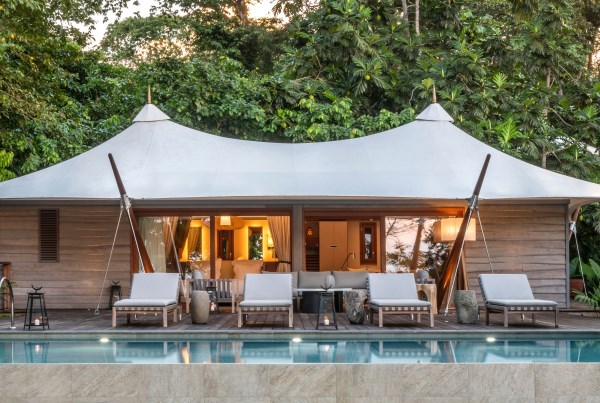
Sundy Pria, Príncipe
SEYCHELLES – green turtle, hawksbill turtle, leatherback turtle, loggerhead turtle and Olive ridley turtle
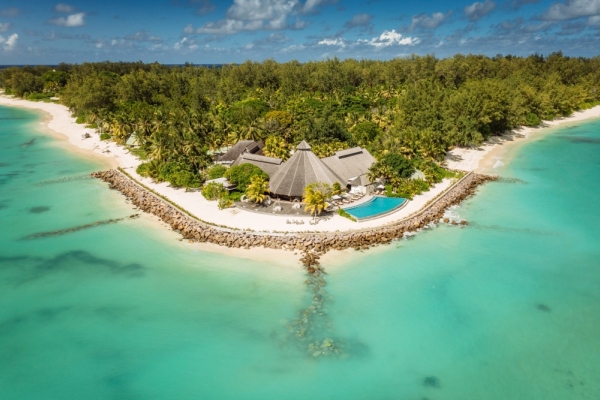
Denis Island, the Seychelles
The islands of the Seychelles offer some of the most pristine turtle nesting habitat in the world. Praslin has extensive coral reefs and seagrass meadows that mature green turtles particularly love, while Denis Private Island, 90km north of Mahé, is surrounded by reefs rich in marine life.
When to go: October to March is the prime window when visitors have the best chance of witnessing either nesting adults or hatchlings making their way to the ocean.
Where to stay: Lemuria, Praslin. Denis Private Island, Outer Islands. Le Domaine de L’Orangeraie, La Digue.
How to see them: At Lemuria, guests join the dedicated Turtle Manager on morning beach patrols and, during hatching season, watch hatchlings make their dash to the sea. Denis Private Island offers a more hands-on experience with guests accompanying the conservation team on daily patrols, helping relocate nests, and observing hawksbill and green turtles being monitored and tagged along the island’s protected shoreline. For in-water encounters, Le Domaine de L’Orangeraie is hard to beat; the house reef directly in front of the villas is one of the most reliable places in the Seychelles to snorkel alongside hawksbill turtles.
Alice our Managing Director – visited the Seychelles and stayed at Denis Island and saw four of the five species mentioned in her short 5 day stay.
SOUTH AFRICA – leatherback turtle and loggerhead turtle
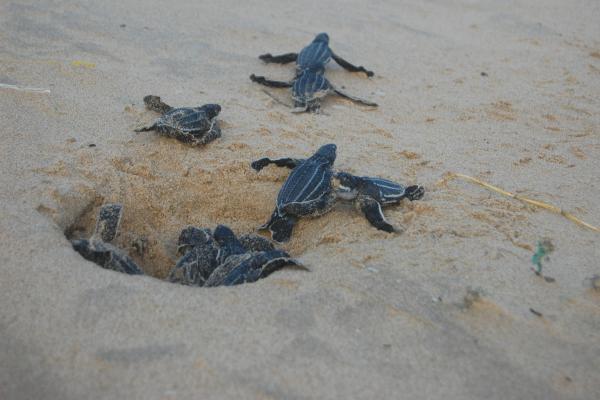
Leatherback turtle, Thonga Beach
The iSimangaliso Wetland Park on the KwaZulu-Natal coast sits on one of the most significant leatherback nesting beaches in the southern hemisphere.
When to go: December to January to maximise chances of seeing both nesting and hatching.
Where to stay: Thonga Beach Lodge, iSimangaliso Wetland Park. Phinda lodges near Sodwana Bay to combine turtle spotting with an exceptional safari.
How to see them: Guided night turtle tours operate from November to February along the iSimangaliso coastline. These must be booked in advance. Sodwana Bay also offers world-class reef diving if you want in-water encounters.
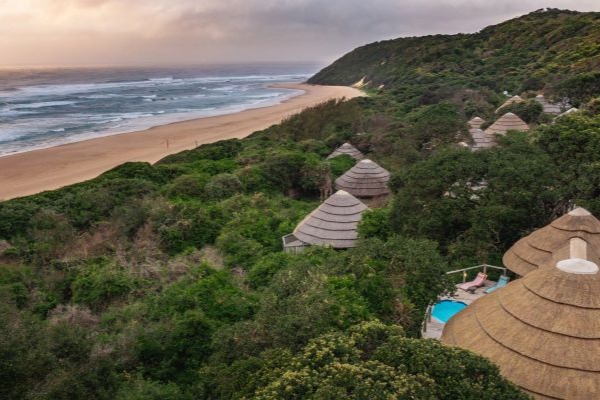
Thonga Beach Lodge, iSimangaliso Wetland Park
ZANZIBAR – green turtle and hawksbill turtle

Mnemba Island, Zanzibar
The reefs around Zanzibar’s offshore islands are some of the most turtle-rich waters in East Africa. Mnemba Island, a private conservation area, is the standout location with the opportunity for an in-water turtle experience for snorkellers and divers.
When to go: Year-round, in-water sightings are possible. Clearest waters for snorkelling and diving: March to May, and September to November, with peak green turtle nesting from June to September.
Where to stay: Mnemba Island, north-east of the island of Zanzibar.
How to see them: Snorkelling and diving at Mnemba Atoll – green turtles are a near-daily sighting. Enjoy evening beach walks during nesting season for a chance to see females coming ashore.
Make the most of your turtle encounter
Wherever you go, a few simple principles make the difference between a positive encounter and a truly memorable one.
Most nesting happens after dark, so always go with a trained guide carrying a red-filtered torch – white light can disorient nesting females mid-lay. The same care applies later in the season when hatchlings emerge; that small consideration is what allows you to witness one of nature’s most quietly moving spectalesas – their first tentative journey towards the sea.
In the water, the golden rule is patience. Maintain a gentle distance, and let turtles surface to breathe in their own time. Stay horizontal, move slowly, and resist the urge to reach out. Give them space, and more often than not, they will give you theirs.
Go and see them while you can
The lodges and resorts in this guide all support active conservation work, many have resident marine biologists, hatchery protection programmes, and morning beach patrols that guests are warmly invited to join. Choosing where you stay is an act of support.
A hundred million years of ocean crossings. Two mass extinctions survived. Somehow, against considerable odds, they are still here and with the right care, they will be for a hundred million more.
What’s next?
Get inspired and sign up to our free Insiders Guide to Africa. We would be delighted to help with planning your perfect safari holiday, whenever you want to travel. Our team of experts has travelled widely throughout Africa and the Indian Ocean and can offer expert advice. Do get in touch – chatting to people by phone or email is what we do best. We listen, we explain, we answer all sorts of questions even those you didn’t know to ask, and finally we make suggestions. If this is your first time to Africa or your twenty first, we have a team standing by to help make the planning easy and the journey the best ever. Please get in touch whatever stage you’re at.



Leave a Reply