
Where can I see African wild dog on safari?
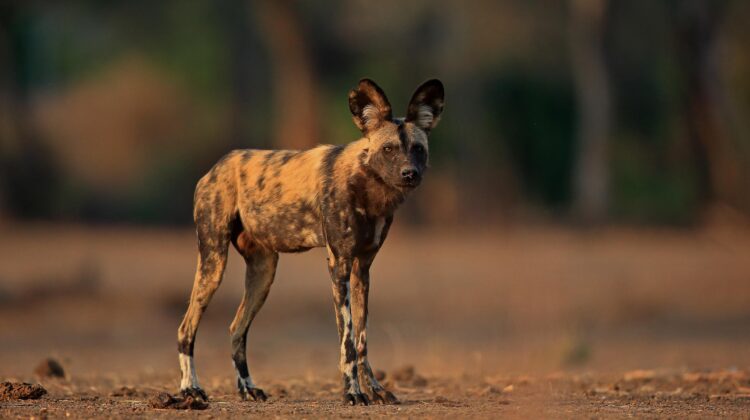
Spotting wild dog on safari is a real treat. One minute you’re sitting, eyes fixed on the vast open plains, and the next, a pack of a dozen or so wild dogs is streaming past at full pace, ears pricked, tails high, chattering to each other as they close in on a herd of impala. It’s over in minutes: one of the fastest, most thrilling pieces of action safari has to offer, and one of the hardest to witness.
Painted wolves: the safari sighting worth chasing
Wild dogs, also known as painted wolves for their patchwork of red, black, brown, white, and yellow markings, are one of Africa’s most captivating predators and often hard to find. Our travel experts share their recommendations and first-hand experience about where you can see African wild dog on safari.
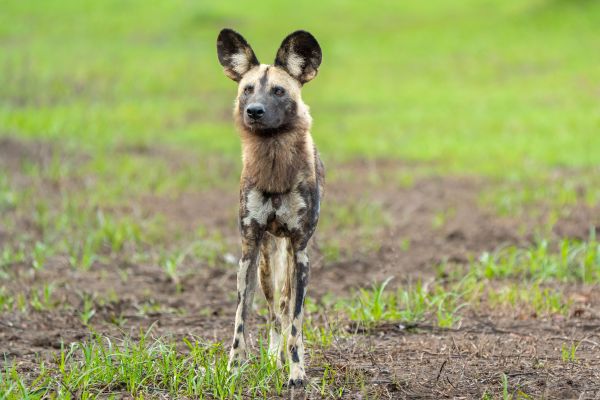
Credit: Luke Katemba, Time+Tide Chinzombo, Zambia
Okavango Delta, Botswana
The Okavango Delta is superb wild dog country year-round, with several camps enjoying resident packs. Our travel expert, Francis, had barely arrived at Beagle Expeditions before word came through: a pack of wild dogs was resting just behind camp, almost close enough to watch from the mess tent. He found them again after lunch, settled at the waterhole beside camp, and spent the next hour watching them play at the water’s edge, taking it in turns to annoy the elephants that had come down to drink, then peeling off the moment they turned to face them down. By dusk, half a mile from camp, the pack had made a kill of their own, eating well before Francis sat down to his own dinner.
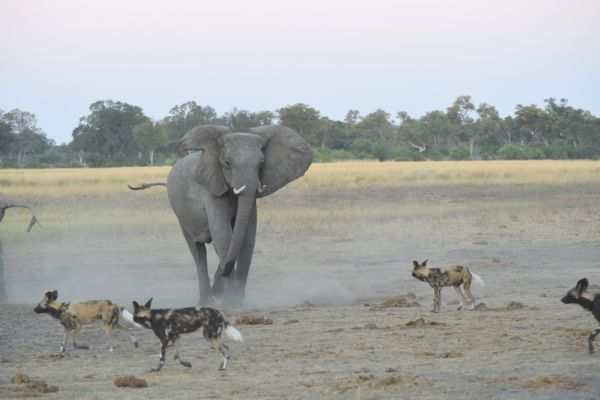
Francis’ photo from Beagle Expeditions, Botswana
Seeing wild dog from the back of a horse gives you an entirely different perspective, letting you get up close to the dogs and cover ground at the pack’s own pace. Managing Director, Alice, saw the same pack of African wild dogs three times on a single African Horseback Safaris trip, riding alongside them each time. It’s a different kind of encounter: wild animals so at ease they seem to forget you’re there at all. That’s what makes a riding safari so special.
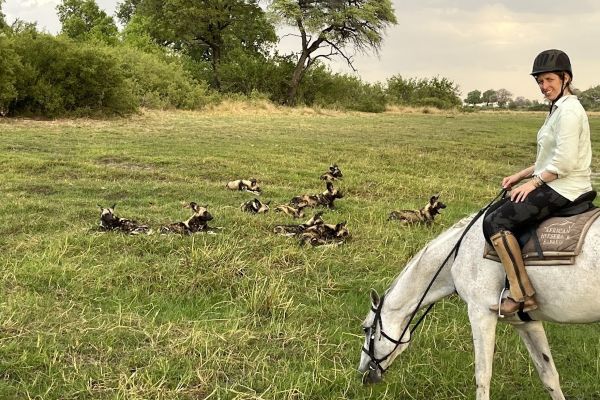
Alice riding at African Horseback Safaris, Botswana
Madikwe Game Reserve, South Africa
Madikwe Game Reserve is another excellent choice for seeing wild dogs. As an enclosed reserve, packs can’t wander beyond its boundaries, which makes sightings more reliable. There are currently three packs living there, and our travel expert, Robyn, has had some exciting sightings recently while staying at Impodimo Game Lodge, including Ghost, one of the dogs easily recognised by his unusually pale, whiter markings.
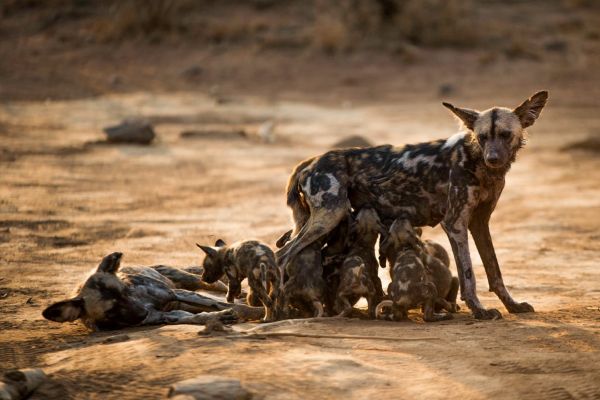
Impodimo Game Lodge, South Africa
South Luangwa National Park, Zambia
South Luangwa National Park has a very healthy wild dog population and, as the original home of the walking safari, is one of the best places to encounter them on foot, with experienced guides. It’s also one of the best-studied wild dog populations in Africa, with several packs monitored by conservation researchers. Guides often know the individual dogs and their histories, which makes a sighting that bit more special. Francis was lucky enough to come across a pack of wild dogs while on a walking safari at Nsefu Camp during the green season. Nsefu has a wonderful remote setting high on the banks above a great bend in the river, with wildlife often seen crossing the water or on the grassy floodplains. As well as wild dog, guests will see plenty of elephant, large herds of buffalo, plenty of lions, and several of South Luangwa’s renowned leopard population, and the camp offers day and night wildlife drives and seasonal boat safaris too.
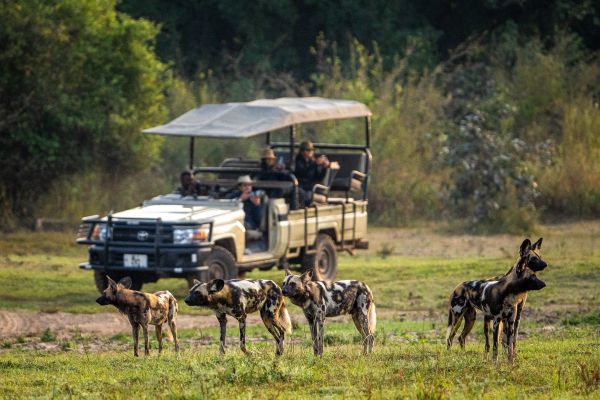
Nsefu Camp, Zambia
We recommend watching Sir David Attenborough’s BBC documentary “Kingdom” filmed over five years in the Nsefu Sector in Zambia’s South Luangwa National Park. Our travel expert Jo shares her knowledge of this area in this blog – Explore the real-life of the BBC’s Kingdom.
Mana Pools National Park, Zimbabwe
A beautiful place that also allows walking safaris, Mana Pools comes with a high chance of spotting wild dogs on foot, and the dogs are relaxed enough around people to get close for fantastic photographic opportunities. We recommend John’s Camp, set in a grove of ancient mahogany trees beside the Zambezi River. For something different, canoe expeditions with Mana Shoreline Canoeing or Ruwesi Canoe Trail travel the length of the park’s river frontage, covering far more ground and a wider variety of habitats than you would from a single camp, and improving your chances of crossing paths with a pack.
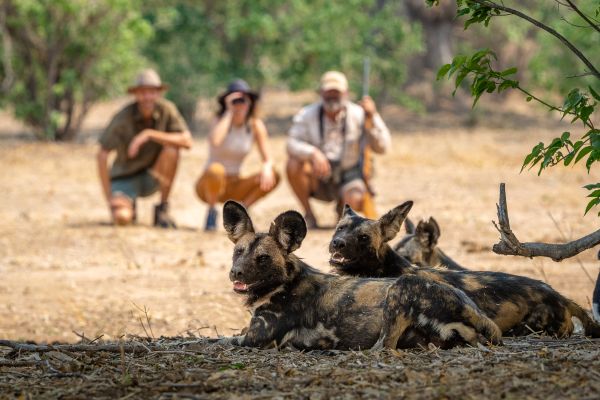
John’s Camp, Zimbabwe
Laikipia, Kenya
North of the equator, the private conservancies of the Laikipia Plateau, among them Lewa, Borana and Ol Pejeta, have become some of the most consistent wild dog territory in East Africa, with several packs denning across the plateau most years. Because these conservancies limit vehicle numbers, sightings tend to be private and unhurried, often with no other vehicle in sight.
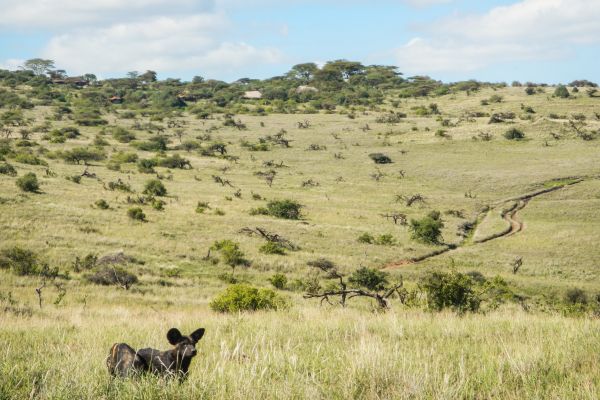
Lewa House, Kenya
Ruaha National Park, Tanzania
Ruaha National Park holds one of Africa’s largest surviving wild dog populations, in a park that still sees a fraction of the visitors of Tanzania’s northern circuit. Its size and remoteness work in the dogs’ favour, giving packs room to roam undisturbed and giving guides space to track them, making it challenging but incredibly rewarding. We recommend staying at Ikuka Safari Camp perched on the edge of the Mwagusi escarpment, with spectacular views across the vast Ruaha National Park.
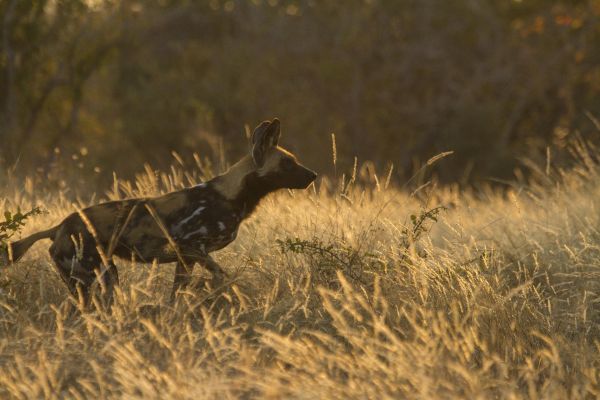
Ikuka Safari Camp, Zambia
When to spot them
Wherever you decide to visit, timing matters as much as location. For most of the year, a pack is constantly on the move, which is part of what makes them tricky to track down, and a sighting all the more special when it happens. Denning season is the exception, running from roughly April to September depending on the location. Once the dominant female has her litter, the pack settles at a single den for around three months. For anyone hoping to see wild dogs, this is the golden window: guides know precisely where the pack will be, with the added joy of watching the pups tumble out of the den to greet the returning adults.
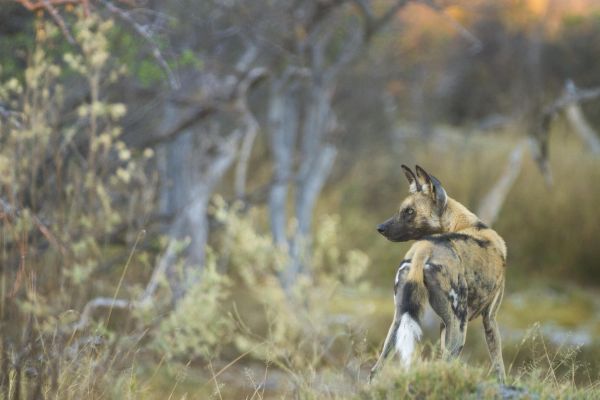
Beagle Expeditions, Botswana
What next?
Our travel experts travel to Africa twice a year, so when they tell you where a pack is currently denning, or which camp has had the best sightings this season, it’s based on their own recent, first-hand knowledge. Every safari we plan is tailor-made around what you want to see, fully ATOL protected, with international flights and every detail organised for you. If you’d love to see a pack of wild dogs on your next safari, get in touch – chatting to people by phone or email is what we do best. We’re happy to talk through the best time and place to go, whatever stage of planning you’re at.


Leave a Reply