
The chimpanzees of Tanzania
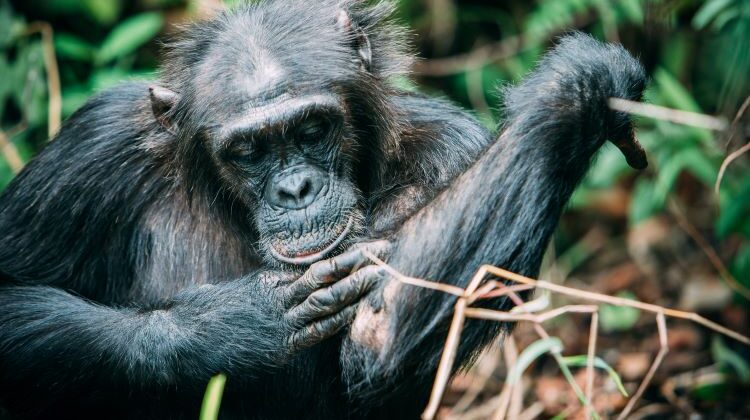
You can’t get any further west in Tanzania than the shores of Lake Tanganyika. It is so remote that the light aircraft that takes you from the safari hub of Arusha needs to stop and refuel halfway. The airstrip ends at the lake shore, so I was mightily relieved when we pulled to a halt just before the land ends and the water begins. The remote and idyllic Greystoke Mahale Camp is my home for the next few nights and the base in which to track the chimpanzees of Mahale.
Chimp trekking in Tanzania’s Mahale Mountains
The camp sits a boat trip away from the airstrip on a beach on the lake, with the forested mountains rising up behind the thatched and tented rooms.
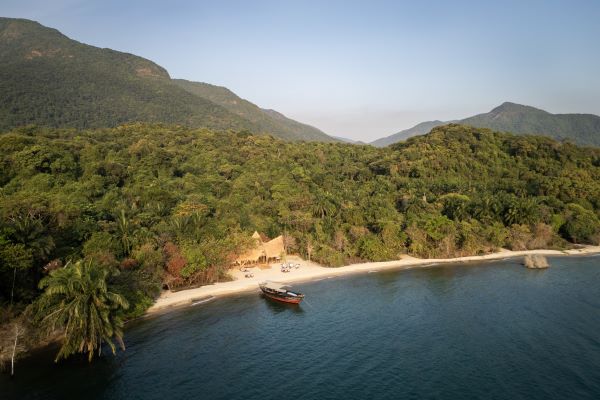
Greystoke Mahale Lodge has beach front lake views, with the Mahale Mountains as a backdrop
If you’re not chimp tracking, then you can explore the clear waters of the lake by kayak and dhow boat.
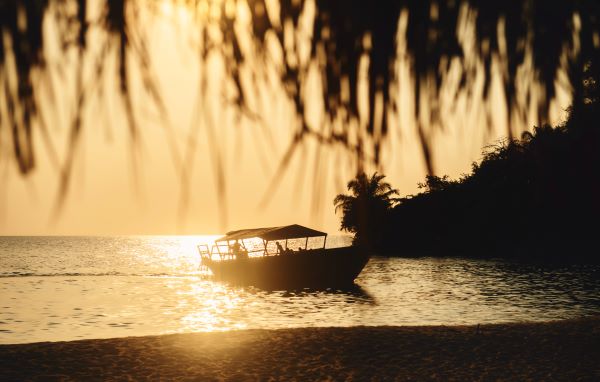
Dhow on the lake at Greystoke Mahale, Nomad Tanzania
Chimps are trekked from Greystoke Mahale Camp in the mornings, similar to the gorillas in Uganda and Rwanda. Unlike gorillas which are typically in one place for the hour of viewing, chimps can be much more active. I witnessed chimps descending from the trees to charge through our groups seemingly making sure people knew this was their home.

Start your day with a gentle morning forest walk to track chimps from your lodge
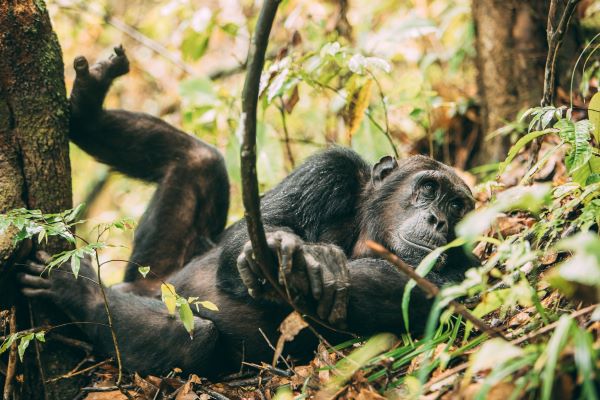
Trackers will take you to meet the lively chimp groups – no two encounters will be the same!
During my second trek, I worked hard following a power struggle through the forest and down to the river as two males fought to dominate the group. Each set of followers clashed with the other group picking up and throwing rocks from the stream bed and making the forest reverberate with their noisy calls.
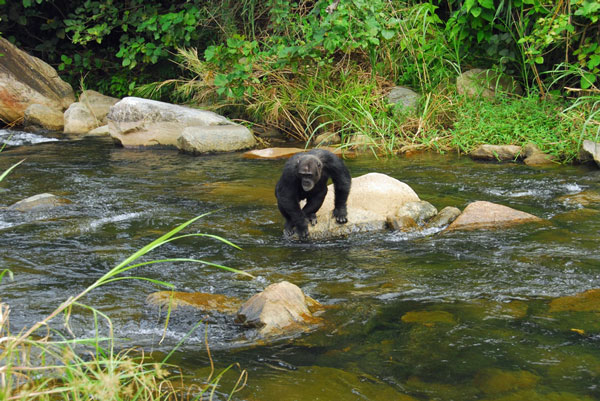
Seeing chimps hunting Jo felt she was in a David Attenborough documentary
I felt as if I was in a David Attenborough documentary as I found myself in the middle of a group hunting colobus monkeys in the canopy. It was brutal and gripping in equal measure and in complete contrast to another day where they were in a clearing, completely relaxed and grooming each other.
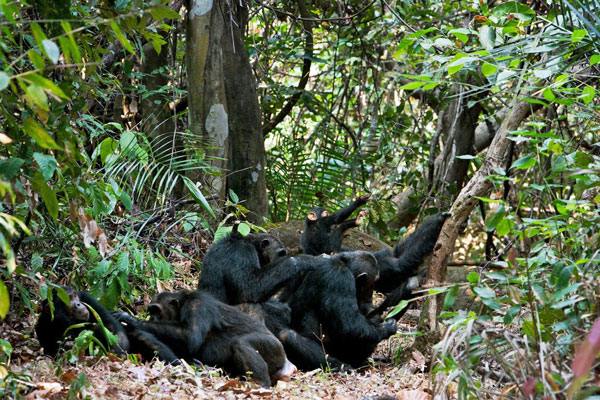
Most of the time chimps are calm and peacefully grooming each other
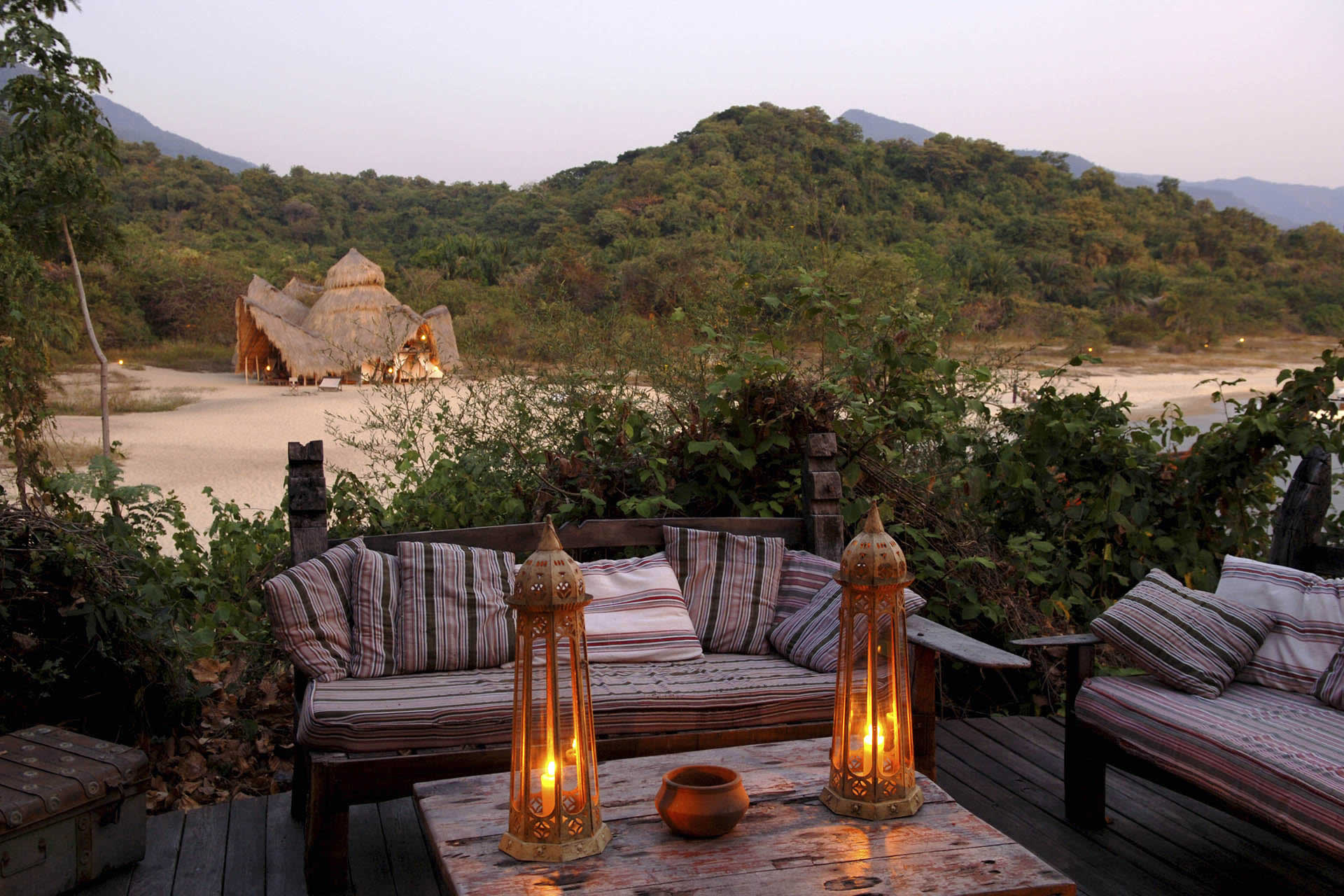
Luxurious beach front eco chic at Greystoke Mahale
For primate lovers Greystoke Mahale Camp and the surrounding forest is a wonderful place to visit. It combines well with (relatively) nearby Katavi National Park, where Chada Katavi is a superb base for a safari. Our safari experts have visited and stayed in both.
Any questions on a chimpanzee trekking safari in Africa?
If you’ve got this far and not found an answer to a question you have that we should have included, please ask in the comments section below, or pop us an email. We’ll be sure to reply and may amend the article to include our answer.
What next?
Get inspired and sign up for our free Insider’s Guide to Africa. We would be delighted to help you plan a holiday, or answer any questions about visiting gorillas or other primate safaris. Our team of experts have travelled widely throughout Africa. They can offer expert advice on every type of safari from gorillas and chimpanzees to lemurs and other primate safaris. If you would like to talk to someone who has been there and done it, please just send us an email or give us a call.
 Tsarabanjina[/caption]
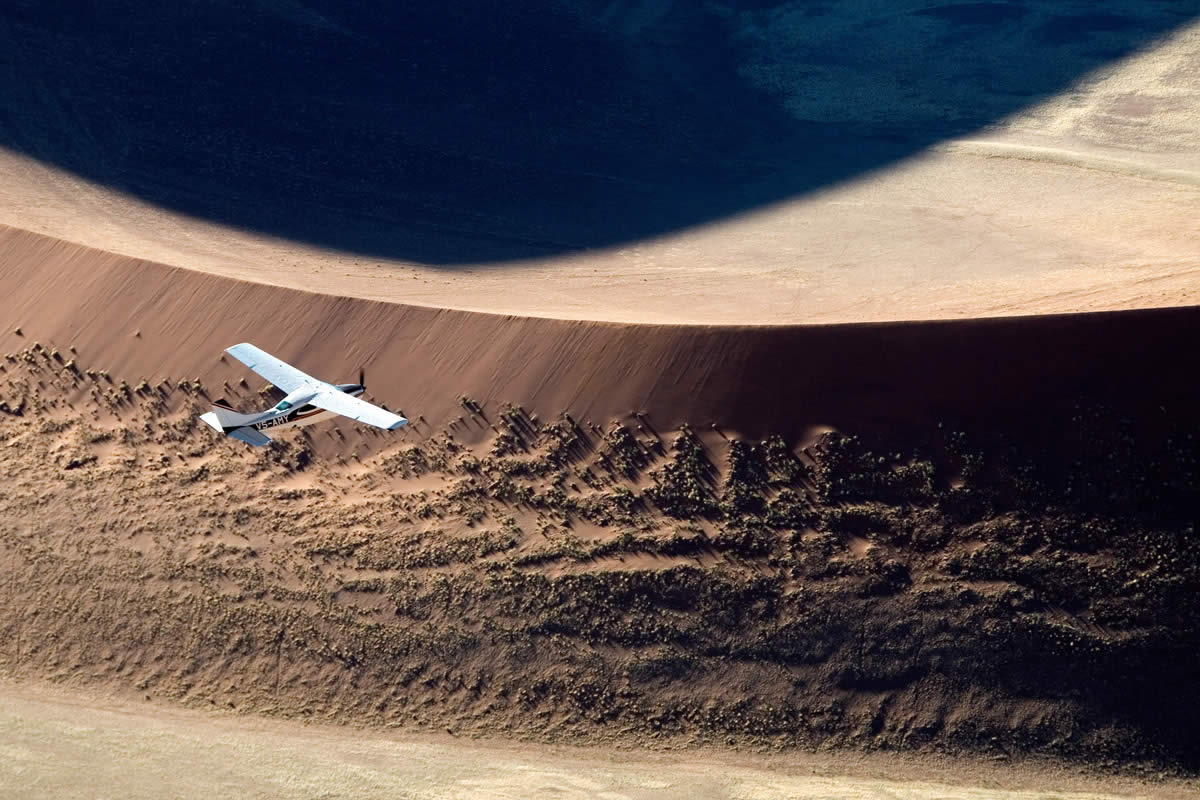 Kunene Camp[/caption]
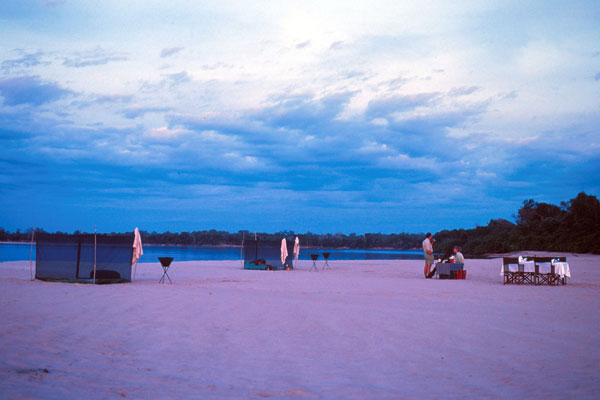 Sand Rivers[/caption]

The evolution of chimpanzees highlights their remarkable intelligence and adaptability. We share more with them than we often realize. We have some informative blogs on: https://animalliferesearch.com/category/mammals/chimpanzee/
Thanks for sharing, Katy
We are going to tanzania 28th november and just see this
Hi Ashfield, I think you will have the most incredible times. We’ve just welcomed guests back from here who couldn’t recommend it highly enough.
Can you tell me how active you need to be. I don’t have any disability but at 70 I know my limits!
Just a rough idea of how much walking and difficulty of terrain
Thank you
Dear Denise, Thanks for your comment. The Mahale Mountains require a moderate level of physical fitness and a high degree of mobility. Unlike a standard safari, you will be hiking off-trail through dense tropical rainforests, navigating steep ridges, slippery roots, and high humidity for anywhere from two to six hours. While you don’t need to be an experienced hiker, you should be comfortable walking several miles on uneven, hilly terrain. The difficulty fluctuates with the seasons; during the dry season (July-Sept), chimps stay lower on the slopes, making for a shorter walk, whereas the rainy season (November – May) may require a more strenuous climb into the high mountains. I will pass on your details to our travel experts, who will be in touch with further details. Many thanks, Katy