
Safari by night: discovering the wild after dark
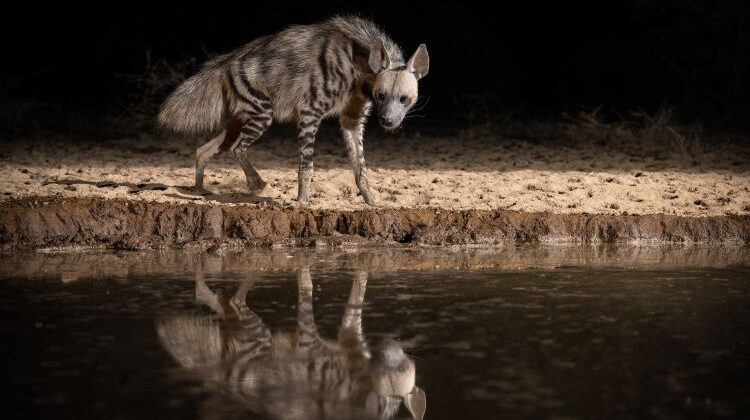
When most people picture a safari, they imagine golden savannahs bathed in sunlight, herds of wildebeest on the move, or elephants lumbering towards a water hole. This is only half of the safari. In fact, nightfall in the wilderness opens the door to an entirely new adventure. A night safari offers a glimpse into the secretive, nocturnal world of wildlife and is a thrilling experience.
Why night safaris are so special
The African bush transforms completely at night. The familiar landscapes you saw during the day take on an air of mystery, illuminated only by the moon, stars, and the beams of your guide’s spotlight. Suddenly, your senses sharpen, you notice the chorus of crickets, the hoot of an owl, or the distant roar of a lion. Without the distraction of the daytime hustle and bustle, the nocturnal wilderness feels raw and alive. Many animals that rest during the day become active at night. Predators like leopard and lion hunt under the cover of darkness, while smaller mammals, such as genet, civet, porcupine, and bush babies, emerge from hiding to go about their business. For bird enthusiasts, nocturnal species such as nightjars, with feathers surrounded by bristles like a moustache around the beak, and owls with pink eye shadow make a rare appearance. A night safari unveils niche species that even seasoned safari-goers often miss.
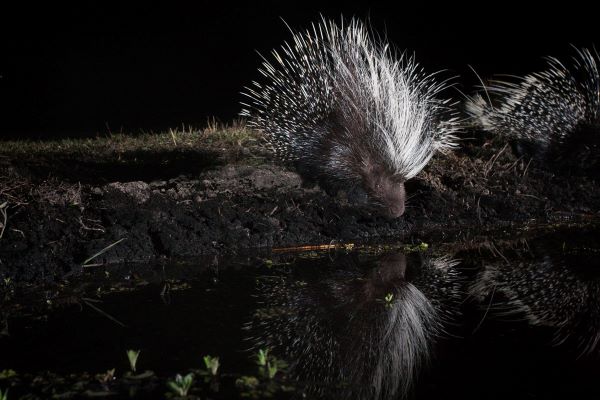
Porcupine, King Lewanika, Zambia
What to expect on a night safari
Having many hands and eyes makes light work, with your guide and an extra tracker skilfully sweeping the beams of light across the bush, their trained eyes picking up the faint reflection of animal eyes hidden in the darkness. The experience can feel like stepping into a live documentary. Expect a slower pace than during the day. The vehicle moves quietly, giving you time to absorb the atmosphere. Your guide may stop the engine completely to let you listen to the sounds of the night – the laughter of a hyena, the rustle of unseen movement in the grass, or the alarm calls of antelope or baboon signalling some form of danger that might be nearby. Every moment feels charged with anticipation
The guides and trackers from the lodges and camps use filtered spotlights, often red in colour and avoid shining directly into animals’ eyes for prolonged periods so as to minimise disturbance. These ethical practices ensure that guests and wildlife alike can enjoy an encounter while protecting the delicate nocturnal rhythm of the bush.
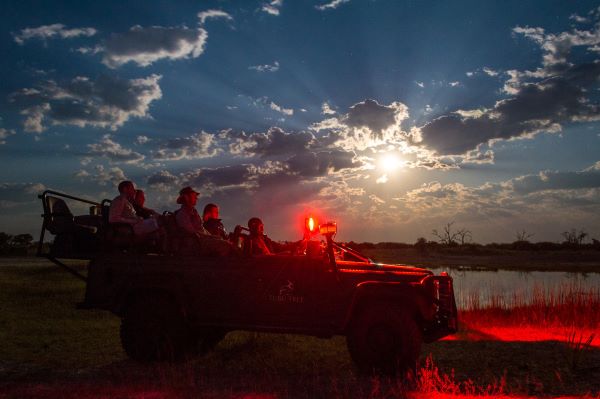
Little Tubu Night Drive, Botswana
Where to enjoy a night safari
Masai Mara don’t permit night drives, we can recommend private reserves and conservancies that offer unique after-dark experiences. If you’re hoping for a close encounter with a leopard, we highly recommend Botswana’s Okavango Delta or Zambia’s South Luangwa, both renowned for their incredible nocturnal wildlife viewing.
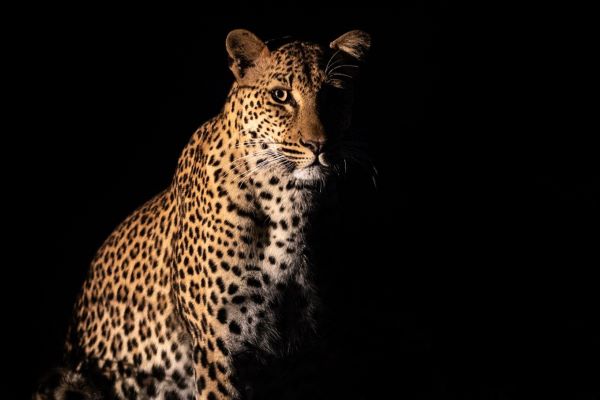
Leopard at Kaingo Camp, South Luangwa
For those wanting to take the night safari experience a little further, fly camping offers something truly special – and it’s honestly one of my favourite activities on safari. It’s beautifully simple: a light canvas shelter or even just a cubed mosquito net, a campfire for warmth, a very comfy mattress and a blanket of stars overhead. There’s a certain magic in drifting off to sleep with the bush as your soundtrack. When morning breaks and the first light spills across the horizon or peeks through the branches, it feels as though you’ve become part of the wilderness itself. For many, the combination of a night drive followed by fly camping is the moment that lingers long after the trip has ended.
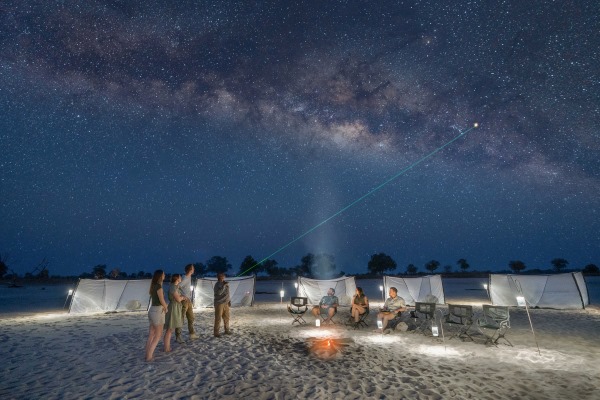
Mchenja sleepout, Zambia
Some places even take it a step further with riverbed sleep-outs, like when you combine Mchenja, Nsolo and Kakuli in the South Luangwa, where the only ceiling is the Milky Way. If fly camping feels a little too adventurous, many lodges now offer beautiful star bed sleep outs, either on raised decks or above your lodge room. Onduli Ridge in Namibia, Skybeds in Botswana, Tswalu in South Africa, and sleep-outs at John’s Camp or Ruckomechi in Zimbabwe are just a few of the impressive options.
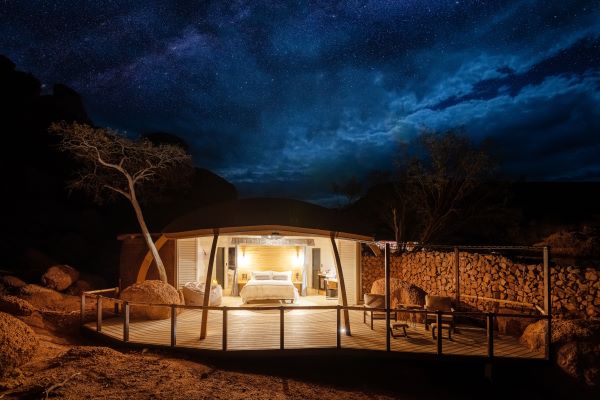
Onduli Ridge, Namibia
How to make the most of it
Dressing warmly is essential, as nights in the bush can be surprisingly chilly even after a hot day. Staying quiet and alert allows you to tune into the sounds of the wilderness and increases your chances of witnessing natural behaviours up close. Bring binoculars, especially those suited for low light, that can enhance your ability to spot elusive species hiding in the shadows. Most importantly, keep an open mind: while you may not always encounter the big predators, the smaller nocturnal creatures can be just as captivating and offer their own unique magic.
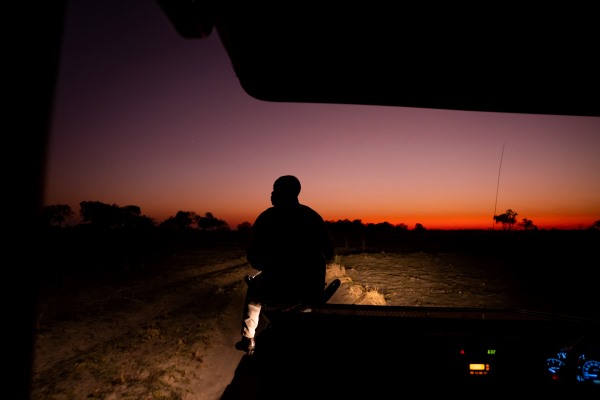
Pom Pom Camp Night Drive, Okavango Delta
A night drive adds an exhilarating layer of mystery and excitement to your safari. It’s a rare chance to see Africa’s most secretive and hard-to-find creatures, like the shy aardvark and the tenacious honey badger. If your camp or lodge offers a night drive, we highly recommend it—it’s an unforgettable adventure for the whole family.
What next?
We don’t just book holidays; we help craft life-changing family adventures, and we can’t wait to help you plan yours. Sign up to our free Insiders Guide to Africa. We would be delighted to help with planning your perfect family safari, whenever you want to travel. Our team of experts has travelled widely throughout Africa and the Indian Ocean and can offer expert advice. Do get in touch – chatting to people by phone or email is what we do best. We listen, we explain, we answer all sorts of questions even those you didn’t know to ask, and finally we make suggestions. If this is your first time to Africa or your twenty first, we have a team standing by to help make the planning easy and the journey the best ever. Please get in touch whatever stage you’re at.

Leave a Reply