
The bees that are saving Kenya’s farms and its elephants
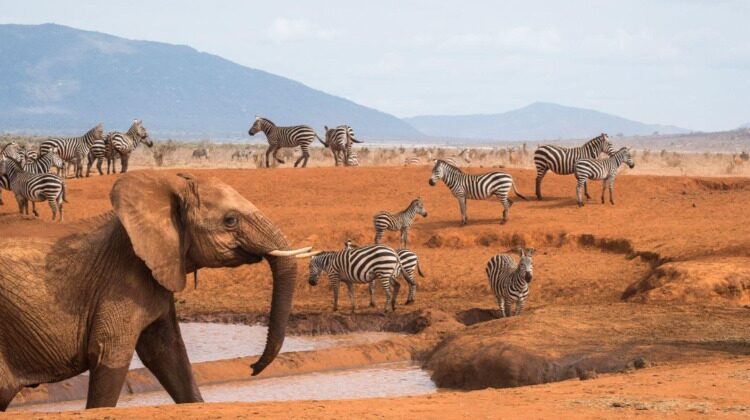
Elephants are afraid of bees. That single fact, confirmed by field research, is now the basis of a low-cost defence protecting crops and livelihoods across Kenya.
The discovery came from Save the Elephants, the Nairobi-based research and conservation organisation founded in 1993 by the zoologist Iain Douglas-Hamilton, in research conducted with the Kenya Wildlife Service, the University of Oxford and bioacoustics scientists from Disney’s Animal Kingdom. Their studies found that elephants run from the sound of disturbed bees and rumble to warn the rest of the herd when they sense a swarm nearby. The fear makes sense biologically: an elephant’s skin is thick everywhere except the eyes, mouth and trunk – precisely where an angry bee attacks.
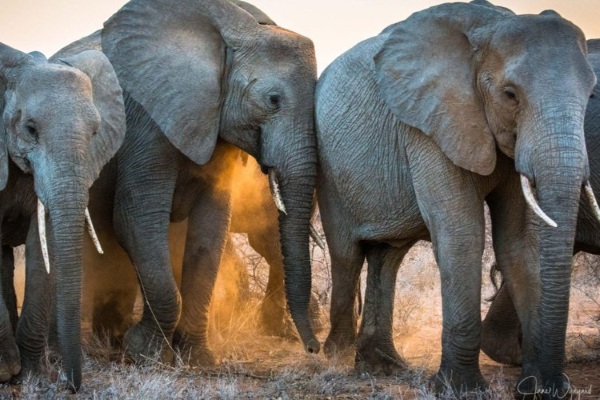
Image credit: Jane Wynard – Courtesy of Save the Elephants
That instinct is what makes a beehive fence work. Hives are strung along a fence line at the edge of a farm. An elephant brushing against the fence disturbs the bees, and the animal retreats before it reaches the crop.
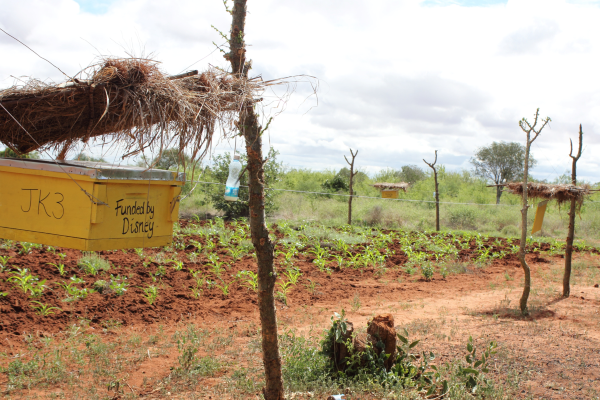
Image credit: Save the Elephants
The project, known as “Elephants and Bees”, was founded by Dr Lucy King, a behavioural ecologist who carried out her doctoral research at Oxford on the bee-elephant relationship and now serves as Save the Elephants’ Coexistence Director, leading the collaboration between Save the Elephants, Oxford University and Disney’s Animal Kingdom.
The fences do more than deter elephants. Communities that install them can sell the honey the hives produce – Dr King calls it “Elephant-Friendly Honey”, turning what was once a threat to their livelihood into a source of income, on top of the harvest the fences protect.
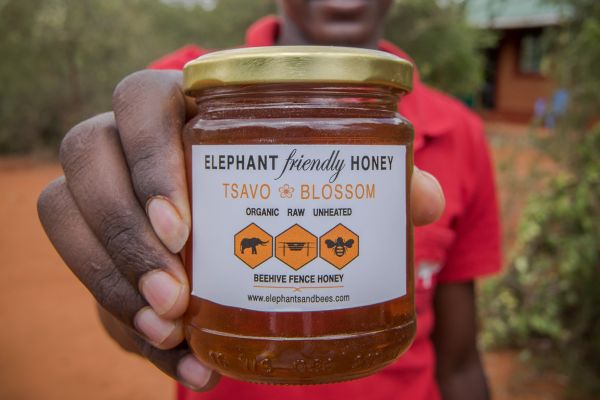
Image credit: Save the Elephants
The method has been tested and refined at three sites in Kenya, where crop-raiding on protected farms has fallen. The project has since built permanent infrastructure to support it: an Elephants and Bees office, a Rufford Honey Processing Room, and a training centre in Sagalla, on the boundary of Tsavo East National Park in southern Kenya. Farmers from neighbouring communities, and from further afield, now travel to Sagalla to learn the technique.
Beyond Kenya
Dr King has since helped establish beehive fences in Botswana, Mozambique, Tanzania, Uganda and Sri Lanka. More than 14,000 hives have now gone up as elephant deterrents across 97 sites in Africa and Asia. The project’s research has produced several scientific publications and three awards: the Future for Nature Award (2013), the St Andrews Prize for the Environment (2013), and the UNEP/CMS Thesis Award (2011).
Human-elephant conflict remains one of the hardest problems in African conservation, pitting real livelihoods against the survival of an endangered species. The Elephants and Bees Project offers a rare case where both sides gain, with a bee sting doing the work of an electric fence.
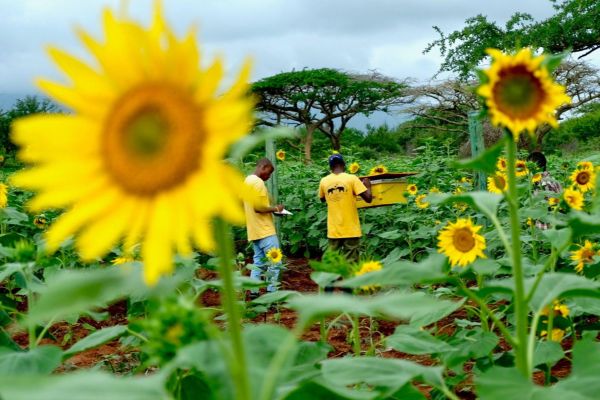
Image credit: Save the Elephants
If your safari takes you through Samburu or Tsavo and you’d like to see the beehive fences for yourself, ask your safari travel experts to weave it into your safari. We highly recommend a stay at Elephant Watch Camp, a privately owned and run tented camp in the Samburu region of northern Kenya. The camp is beautifully located on the sand banks of the Ewaso Nyiro River, beneath big kigelia and acacia elatior trees.
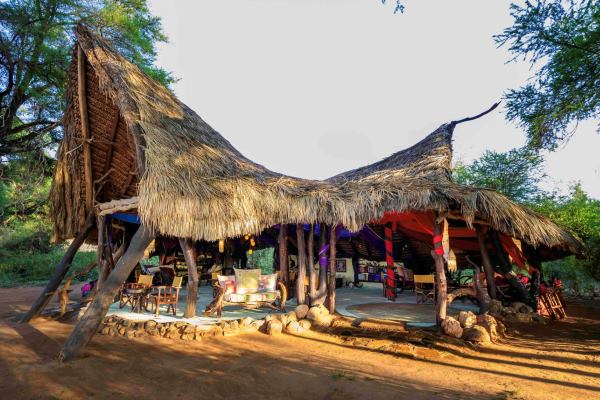
Elephant Watch Camp, Mess Tent
What next?
Get inspired and sign up to our free Insiders Guide to Africa. We would be delighted to help with planning your perfect safari holiday, whenever you want to travel. Our team of experts has travelled widely throughout Africa and the Indian Ocean and can offer expert advice. Do get in touch – chatting to people by phone or email is what we do best. We listen, we explain, we answer all sorts of questions even those you didn’t know to ask, and finally we make suggestions. If this is your first time to Africa or your twenty first, we have a team standing by to help make the planning easy and the journey the best ever. Please get in touch whatever stage you’re at.

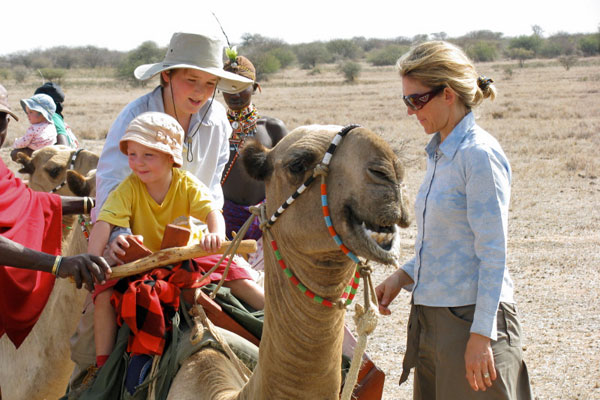 Camel safari, Kenya, Laikipia,
 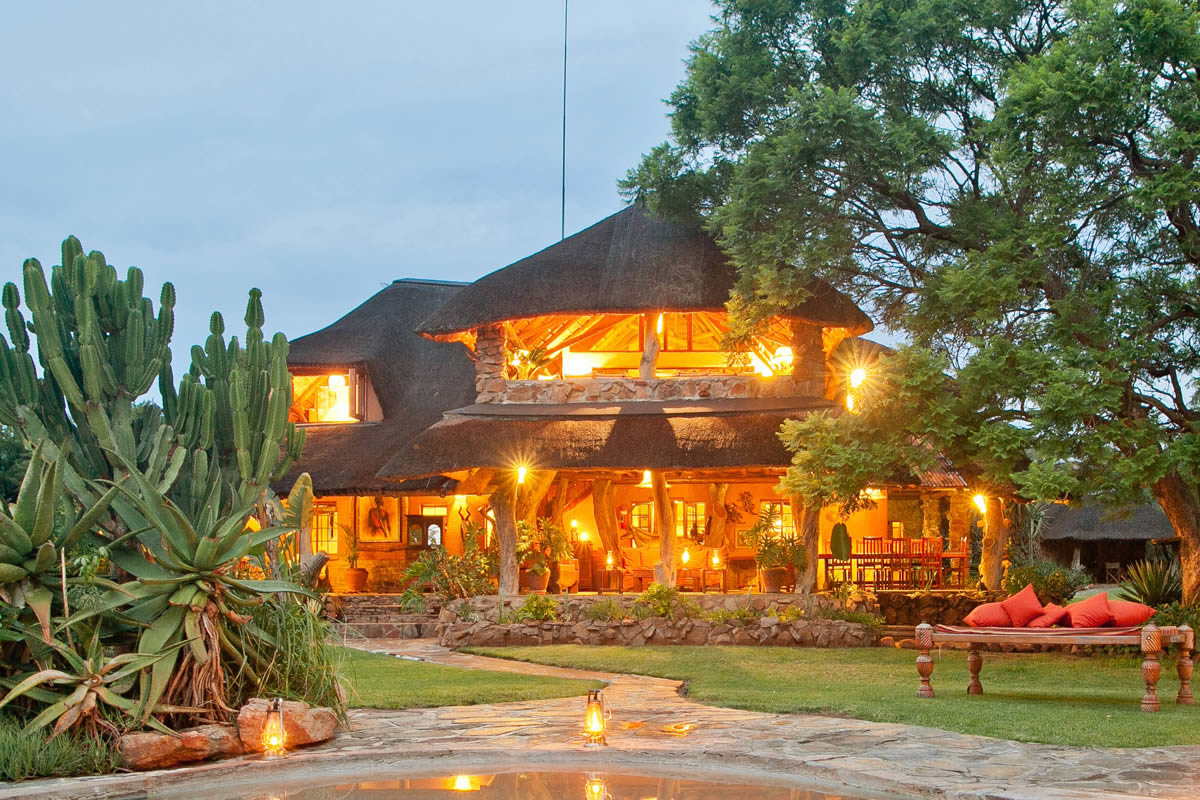 Luxury safari accommodation Waterberg, South Africa,
 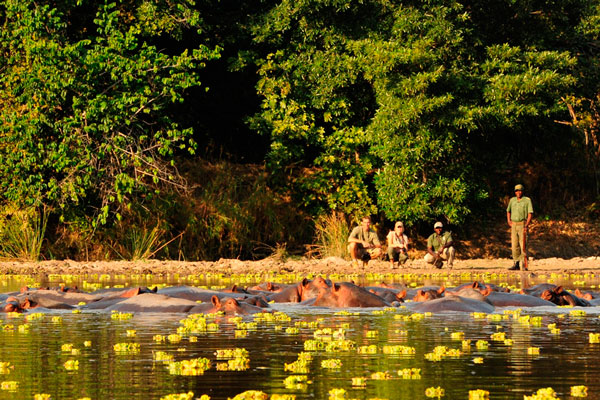 Hippos on a walking safari, South Luangwa, Zambia,


Leave a Reply