
Meet Kenya’s Northern Five
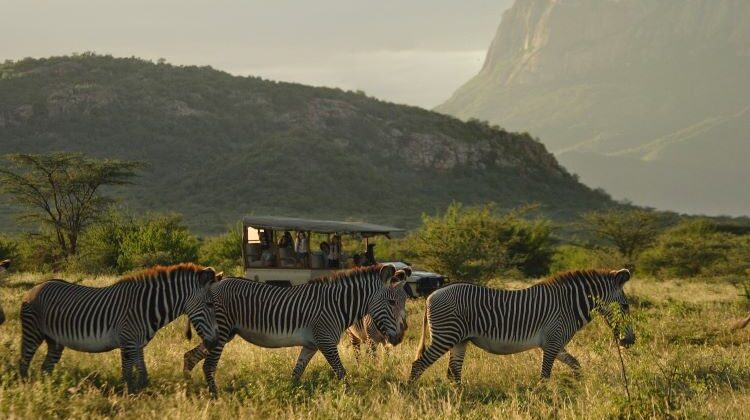
Safari has long been synonymous with the ‘Big Five’ but what, you ask, is the Northern Five?
At Aardvark Safaris we like to encourage people to visit more than one region when on safari, for a change of landscape, habitats, and biodiversity. A visit to northern Kenya might just reveal some unique animals, many of which you’re unlikely to see elsewhere.
In contrast to the ever-popular Masai Mara, areas like the Laikipia plateau and Samburu or Meru County, make a wonderful addition to any safari. With much of it being semi-arid savannah and semi-desert, you’ll find red dirt under foot and ochre-coloured rocky outcrops overhead, features that tell the story of an ancient landscape, and one that still has plenty of green vegetation following the rains to support really healthy wildlife populations.
Home to an array of endangered species and in addition to the northern five, it’s the best place in the country to see both white rhino and the critically endangered black rhino.
The Northern Five
Reticulated giraffe (Giraffa reticulata)
Arguably the most striking of the four species of giraffe, with their rufous colour matching the environment around them and distinctive white lines creating polygon shapes across their body, they are predominantly found in the northern regions of Kenya, with only few hundred estimated to live in Somalia and Ethiopia.
They aren’t the tallest of the four, with that title going to the Masai giraffe, but much like the Masai giraffe, they’re also an endangered species.
Meru National Park sits within Meru County, north-east of Mount Kenya, with dramatic scenery and a great place to find gerenuk. Our favourite camp there is Elsa’s Kopje Which is in the area famous for the ‘Born Free’ story and film. The lodge and tourism has saved the national park, from becoming rice farming land.
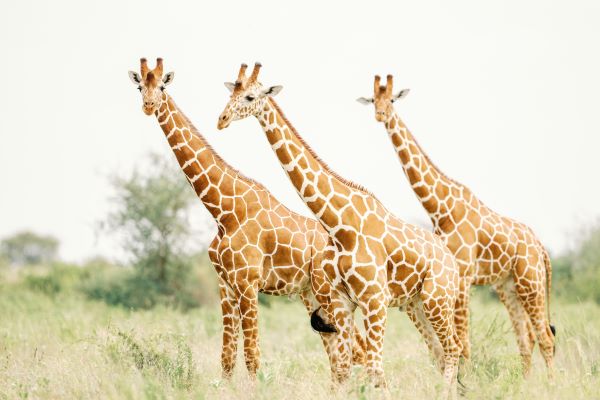
Elsa’s Kopje reticulated giraffe
Beisia or East African oryx (Oryx beisa)
A striking looking antelope, once found throughout Uganda, Somalia and Djibouti, it now primarily occurs in northern Kenya. Very similar in appearance and habits to the southern African oryx (or gemsbok) and much like them, they generally form smaller herds numbering around half a dozen, although when conditions allow they might gather in ‘tribes’ of over 40.
Elephant Watch Camp and Saruni Samburu in the Samburu region is a great place to see oryx. Although Elephant Watch Camp’s main focus is on experiences with the largest living land mammal (and it’s a wonderful place to get a real insight into them too), as you head out into the Samburu National Reserve you will also encounter many of its other inhabitants.
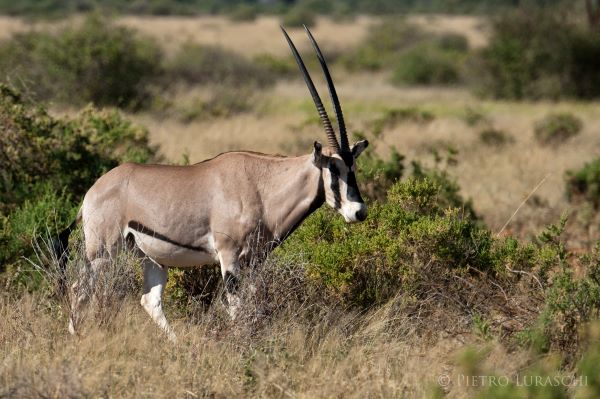
Beisa oryx Saruni Samburu
Gerenuk (Litocraniys walleri)
This distinctive antelope looks like a cross between an impala and a giraffe and, much like the giraffe, it has evolved a longer neck to browse on foliage that is out of reach for smaller antelope. They will also stand up on their hind legs to reach higher. The males are adorned with marvellous S-shaped horns and they’re often seen in pairs or small groups.
Heading out with Karisia Walking Safaris, or staying at Tumaren Camp, provides you with an opportunity to go on a walking safari and share strides with these magnificent creatures.
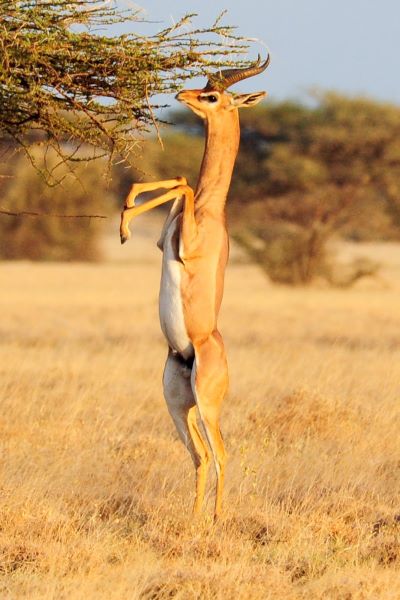
Gerenuk Karisia Walking Safaris
Grevy’s Zebra (Equus grevyi)
Another one of Africa’s famous residents, the zebra, is, like the giraffe, more than one species. The most numerous and best known is the plains zebra but there is also the mountain zebra and, arguably the most exquisite of them all, the Grevy’s zebra. With an estimated population of less than 3000 individuals, they are also sadly on the endangered list and Kenya is their stronghold. Most easily identified from their greater size, large, fluffy ears and chic narrow stripes, they can be found alongside plains zebra with their larger, wider stripes, making the two easy to tell apart.
Laikipia Wilderness Camp is a brilliant location to see Grevy’s zebra, alongside African wild dogs and possibly a melanistic (black) leopard too. Grevy’s zebra and reticulated giraffe can be spoted on horseback at Sosian Lodge which offers fantastic rides in this area.
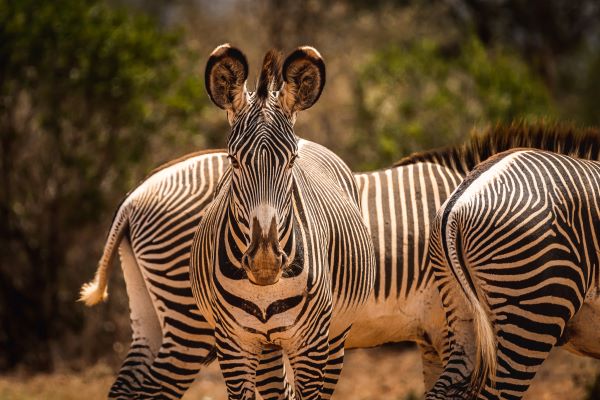
Sosian Lodge Grevy’s zebra Laikipia
Somalia ostrich (Struthio molybdophanes)
As the name suggests this lesser-known species of ostrich was historically widespread across Somalia, along with Ethiopia and Kenya. It was only decided in 2014 that this is a separate species from the common ostrich. It is sometimes called the blue-necked ostrich; you will probably be able to see why, particularly when compared to the northern subspecies of common ostrich which has a bright pink neck and legs and is sometimes called the red-necked ostrich.
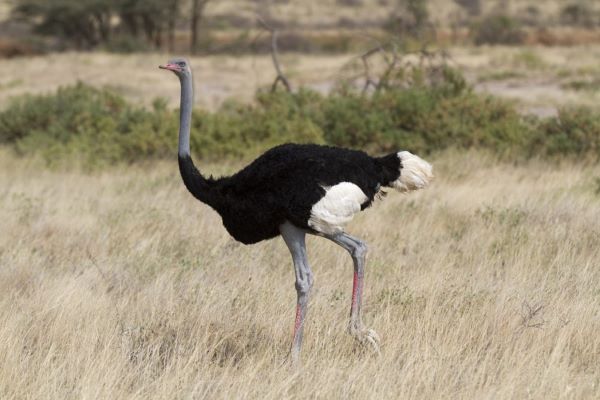
Somalia ostrich – blue neck ostrich
Stay at the Safaris Series Camp in the Lolldaiga Hills of Laikipia, or Saruni Samburu for a good chance to see them. Saruni Samburu is located on the Kalama Community private conservancy just outside of the Samburu National Reserve and from there you can take drives into the Samburu National Reserve.
What Next
We would be delighted to help you plan a holiday, or answer any questions if you’re at an earlier stage. Our team of experts have travelled widely throughout Africa. They can offer expert advice on every type of safari from family and beach holidays to riding and primate safaris. If you would like to talk to someone who has been there and done it, please just send us an email or give us a call.


Leave a Reply